Real estate is a dynamic and competitive landscape. A successful pitch can make all the difference in securing clients and closing deals. There are two primary types of real estate pitches: pitching to homeowners who want to sell their homes and pitching real estate properties to buyers.
At the beginning of the listing process, it is crucial to set realistic expectations with sellers. This early engagement helps establish trust and can significantly influence the success of winning and managing listings.
In this article, we will explore the first type: pitching to homeowners. We will delve into how to craft an outstanding listing presentation that will impress sellers and secure business for an agent.
What Is a Listing Presentation?
If you are not familiar with the term, a listing presentation is when a real estate agent showcases their expertise, demonstrates their value, and convinces a homeowner to list their property with them.
It is basically a combination of a strategic pitch and a marketing presentation. Presenting a listing presentation is not just about sharing information; it is about persuading the seller, inspiring trust, and establishing authority. The goal is to show the seller that the agent understands their needs and has the tools, knowledge, and plan to sell the property to their best advantage.
A listing presentation is a critical step in securing a property listing, and as such, it must be a well-organized, persuasive, and engaging package. It is important to tailor the listing presentation to the specific audience of homeowners to effectively connect and engage with them.
Understanding the Client’s Needs
A truly effective real estate listing presentation begins with understanding the client’s needs. As a real estate agent, your first priority should be to listen carefully to prospective sellers and ask thoughtful questions about their goals, concerns, and expectations for the home selling process. Are they looking for a quick sale, the highest possible price, or a seamless transition to their next home? By identifying what matters most to your clients, you can tailor your listing presentation to address their unique situation and demonstrate your expertise in navigating a competitive market.
Taking the time to understand your sellers not only helps you establish trust but also allows you to present solutions that are relevant and valuable. This client-focused approach sets the foundation for a strong listing presentation, showing that you are not just another agent, but a dedicated partner invested in their success. By aligning your strategy with their needs, you position yourself as the best choice to represent their property and guide them through the home selling process.
Key Elements of a Listing Presentation
Including all relevant details in your listing presentation is essential to build trust with potential sellers and demonstrate your expertise.
Agents can also leverage additional resources to further enhance their listing presentations and improve their overall business strategies.
If you want to create a winning listing presentation, here are the elements you should consider including:
1. Introduction and Personal Branding
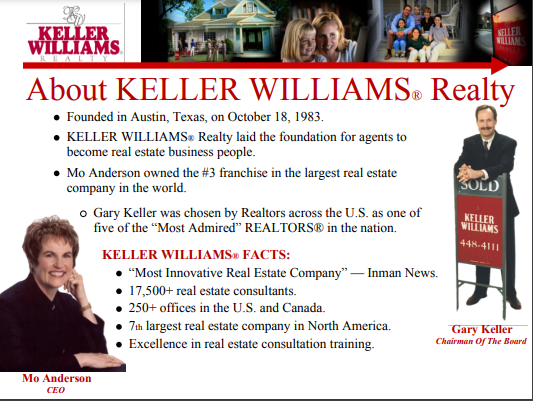
Begin with a warm introduction and brief background about yourself, your real estate experience, and your brokerage. Highlight your brokerage’s reputation, proven track record, and the support infrastructure it provides, which contributes to your success as an agent. Emphasize your accomplishments, certifications, and any unique qualities that set you apart, leveraging the strengths of your brokerage to build trust with clients.
Here’s how a major real estate agency introduces itself in its listing presentation, showcasing the grand scale of activity and experience.
And a different example of how to introduce a single real estate agent. It also focuses on the agent’s accomplishments and experience.

Some realtors show the most significant sales as proof of their accomplishments, like in the example below.


2. Market Analysis
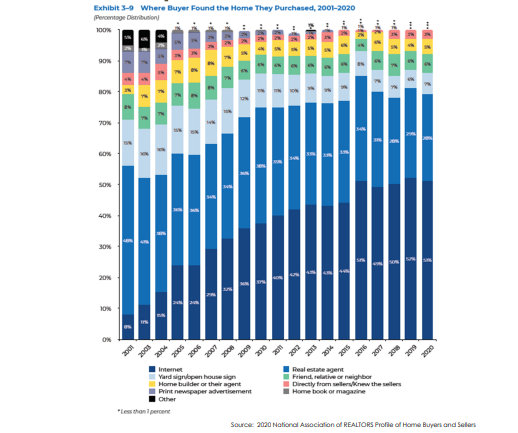
Provide a detailed comparative market analysis (CMA) and show the seller how their home fits into the current real estate market. Conduct thorough research to gather accurate data on recent sales of comparable properties, current listings, and market trends in the area. Use visuals like bar charts or graphs to make the data easy to understand.
This graph from a listing presentation shows the analysis of sources buyers use to purchase real estate where realtors take second place close behind the Internet proving their efficiency.
3. Property Valuation
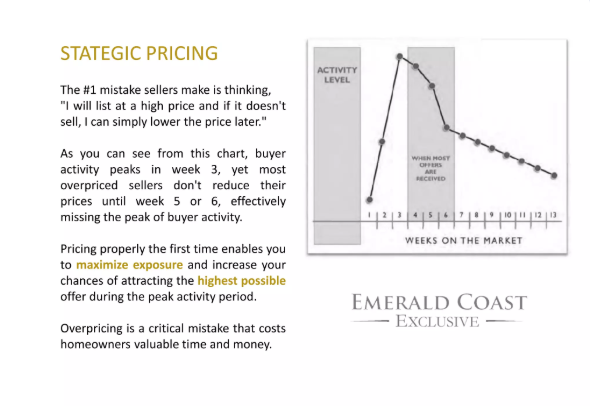
Discuss your recommended listing price for the home, supported by data from your CMA. Be transparent about the pricing process and explain the importance of evaluating the property correctly to attract buyers. Highlighting the property’s unique features, such as high-quality HDR photos or virtual tours, can help justify the recommended listing price and make the home more appealing to potential buyers.
In the example below, the agent specializing in selling luxury estate shows potential sellers the importance of strategic pricing which goes far beyond simply listing a house at the highest price possible and waiting for somebody to take the bait.
Here’s a less conventional approach from a different realtor that may probably connect to potential sellers even better.

4. Marketing Plan
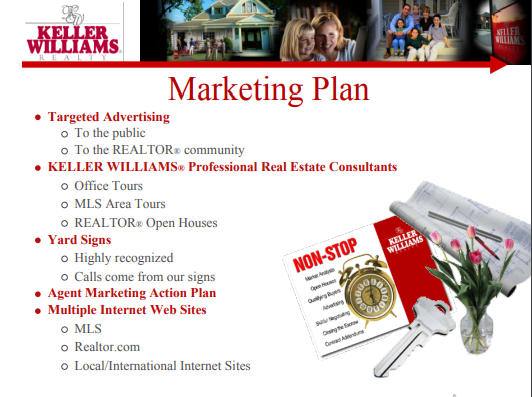
Outline your strategy for marketing the property. We recommend including both online and offline tactics, such as:
- Professional photography and virtual tours
- Online listings on platforms like Zillow, Realtor.com, and MLS
- Social media campaigns
- Email marketing to your network of buyers and agents
- Hosting open houses and private showings
- Targeted ads to increase exposure and attract interest
After implementing these tactics, we actively promote your property through multiple channels to reach potential buyers and maximize visibility.
We also incorporate video presentations and walkthroughs as part of our marketing plan to engage and inform interested buyers.
By highlighting the most effective marketing strategies, we ensure your property stands out in a competitive market.
Here’s an example of a marketing plan from a respectable realtor.
5. Success Stories
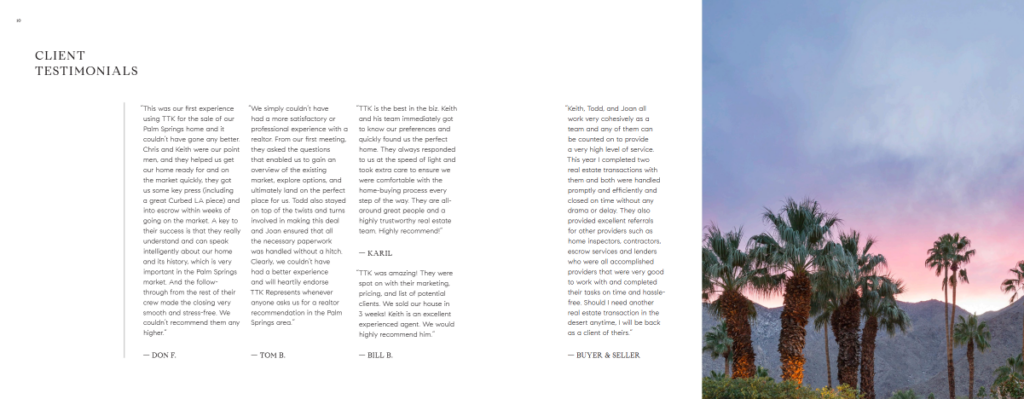
Include testimonials or success stories from past home sellers to build trust and credibility. Real-life stories from home sellers bring authenticity and a personal touch, and storytelling is a powerful tool for any presentation.
In the example below, a realtor included a whole page of client testimonials in the listing presentation.
6. Timeline and Process
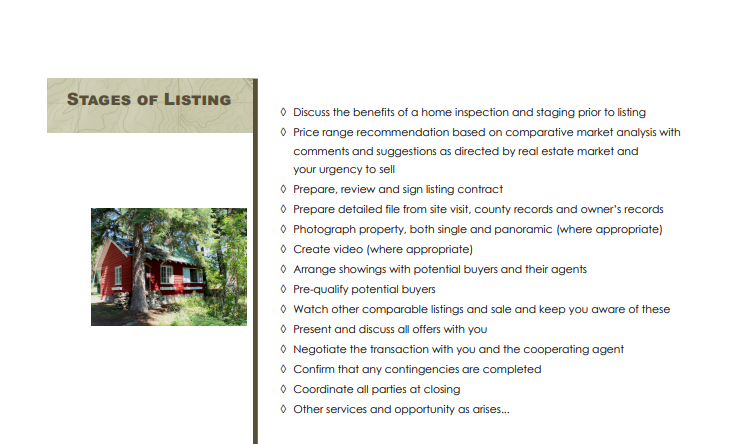
Explain the timeline for preparing, listing, and selling the home. Provide a step-by-step outline from staging and photography to negotiations and closing. That will ensure trust from a seller and their sense of security.
The process begins with signing a contract to formalize the agreement and initiate the official procedures. It’s important to establish a target date for listing the property or closing the sale, so everyone is clear on the timeline. Guide the seller through the process of signing all necessary documents to ensure a smooth transaction.
Here’s an example of a detailed timeline provided in a listing presentation.
Building a Strong Relationship
Building a strong relationship with prospective sellers is at the heart of every successful real estate listing presentation. As a listing agent, your ability to connect on a personal level can make all the difference in a client’s decision to work with you. Start by being genuine and approachable — show interest in their story, listen to their concerns, and respond thoughtfully. A custom listing presentation that highlights your expertise, showcases your track record, and includes relevant success stories will help you stand out from other agents.
Trust and communication are the cornerstones of a lasting relationship. Be transparent about your process, keep the lines of communication open, and always follow through on your promises. When sellers feel valued and understood, they are more likely to choose you as their agent. By focusing on building rapport and demonstrating your commitment to their goals, you create a positive experience that not only helps you win the listing but also leads to future referrals and long-term success.
Effective Communication
Effective communication is essential for delivering a strong listing presentation that resonates with prospective sellers. As a real estate agent, your ability to clearly explain the home selling process, current market trends, and your unique marketing plan will set you apart. Use straightforward language and avoid jargon, ensuring that your presentation is easy to follow and informative.
Incorporate visual aids such as videos, charts, and data-driven insights to help sellers understand the value you bring as their agent. Tailor your communication style to match the client’s preferences — some may appreciate detailed data, while others prefer a big-picture overview. Most importantly, outline a clear plan of action and next steps, so sellers know exactly what to expect. By communicating with clarity and confidence, you reinforce your expertise and make it easy for clients to see why you are the right choice to represent their property.
Tips for Giving a Listing Presentation
The listing appointment is the key meeting with the homeowner, and even the most comprehensive listing presentation can fall flat without the right delivery. Let us arm you with some tips to ensure your pitch resonates with the homeowner:
- Be thoroughly prepared for the listing appointment: Arrive with all necessary materials, a strong presentation, and a clear plan. Being well-prepared demonstrates professionalism and increases your chances of securing the listing.
- Practice your presentation with your team: Rehearse with your team or team members to refine your delivery, anticipate questions, and build confidence.
- Be confident and personable: Connect with the seller by being friendly and professional. Confidence in your abilities will instill trust.
- Listen actively: Pay close attention to the seller’s concerns and questions. Tailor your pitch to address their pains and goals.
- Provide clear and direct answers: Address any questions or objections the seller may have with straightforward, honest answers to build credibility and trust.
Handling Feedback
Handling feedback is a vital part of refining your real estate listing presentation and ensuring it meets the needs of each client. As a listing agent, it’s important to invite feedback during and after your presentation, showing that you value the client’s input and are committed to delivering a high-quality experience. Listen actively to any concerns or suggestions, and be willing to adjust your approach as needed.
Utilizing a free template or guide can help you structure your response to feedback, ensuring you address all client concerns in a professional and organized manner. This not only improves the quality of your listing presentation but also demonstrates your dedication to client satisfaction. By being open to feedback and making continuous improvements, you build trust and increase your chances of winning the listing.
Common Mistakes to Avoid When Crafting a Listing Presentation
Even seasoned agents can fall into common pitfalls when creating a listing presentation. Here are some mistakes to watch out for and how to avoid them:
1. Overloading with Information
While it’s important to provide detailed information, overwhelming the seller with too much data or jargon can confuse and disengage them. Focus on key takeaways and present data visually to make it more digestible.
2. Neglecting Personalization
A one-size-fits-all approach won’t resonate with sellers. Tailor your presentation to their specific property, neighborhood, and needs to show that you’ve done your homework and genuinely care about their goals.
3. Underestimating the Power of Visuals
Skipping or using poor-quality visuals can make your presentation seem unprofessional. Always use high-quality photos, clear graphs, and engaging templates to leave a strong impression.
4. Failing to Address Objections
Sellers often have concerns, whether it’s about your commission, the pricing strategy, or the timeline. Anticipate potential objections and address them proactively within your presentation to build trust.
5. Lack of Practice
Even the best materials won’t shine if you’re not confident and polished in your delivery. Practice your presentation multiple times to ensure a smooth and professional pitch.
Closing the Deal
Closing the deal is the ultimate goal of every real estate listing presentation. As a listing agent, your job is to present your services with confidence, highlight your expertise, and clearly demonstrate the value you offer to prospective sellers. Use compelling data, relevant success stories, and a well-defined plan to show how you will market the property, generate leads, and achieve a successful sale.
A strong listing presentation should end with a clear call-to-action — whether it’s signing the listing agreement, scheduling the next meeting, or outlining the next steps in the process. By focusing on the client’s needs, building a strong relationship, and communicating your plan effectively, you increase your chances of converting prospects into signed listings. Remember, in a competitive market, your ability to deliver results and exceed expectations is what will set you apart and help you grow your business as a top-performing real estate agent.
Final Thoughts
Creating an effective listing presentation for homeowners is more than just sharing data and photos — it’s an opportunity to showcase your expertise, experience, and ability to meet the unique needs of your clients.
To stand out from the competition, your presentation must be not only informative but also memorable. Remember to support your points with visual elements and examples of successful transactions, and provide a clear plan of action.
The key ingredients of a winning presentation are confidence, attention to detail, and the ability to build trust with your clients.
Tools like professional graphics and a well-structured outline can help transform your presentation. A high-quality presentation, like those easily created with tools such as Wonderslide, will personalize your approach and enhance your presentation’s impact.
A well-structured listing presentation works great for agents in any market scenario.
By applying the recommendations outlined in this article, you can craft a presentation that highlights your professional skills and becomes a competitive advantage in securing more listings and achieving greater success in your real estate career.